English
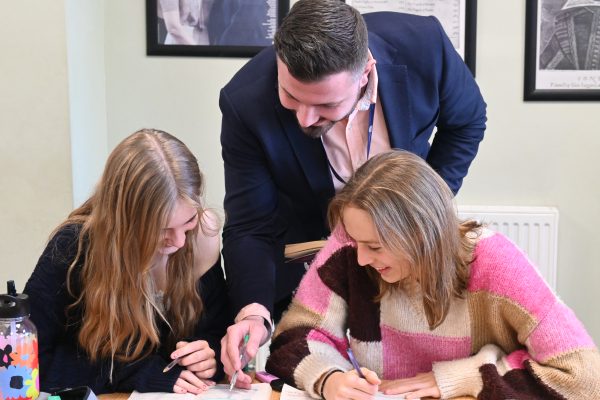
Our students enjoy English because their own personal contribution really matters. We aspire to instill a lasting enthusiasm for language and literature and to ensure that this wonderful subject is enjoyable and memorable for all of our students, giving them the skills needed to speak confidently and fluently, and to write with accuracy and sophistication.
From Years 7 – 9, we follow our own syllabus. Our pupils are inspired by a rich diet of classic and modern literary, dramatic, non-fiction and media texts. We expect our students to be active while learning and so discussion, performance and collaboration are fundamental to our approach. For Year 7 and Year 8, weekly library lessons provide students with the opportunity to dip into a range of new texts, share their enthusiasms and spend time just reading a good book.
We offer an extensive programme of cultural activities that enhance the students’ response to literature and life on a wider scale. For instance, we maintain that Drama should be seen as well as read and so organise theatre trips when possible, as well as offering dramatic workshops with travelling companies. We encourage our students to participate in a range of opportunities to extend their writing, including local and national competitions. Authors visit at least once a year, running writing workshops to enthuse and inspire.
English Language and English Literature are examined as separate subjects, and our students will gain an IGCSE from each of them. Both subjects are taught simultaneously throughout Years 10 and 11.
Lessons are varied and stimulating and consist of debate and discussion as well as both analytical and creative reading and writing. For English Literature, pupils work towards one examination which covers a poetry collection set by the board and a modern prose text. For the English Language course, pupils are encouraged to produce accurate descriptive, narrative and transactional written work and to respond to a range of fiction and non-fiction texts taken from nineteenth, twentieth and twenty-first century sources.
The A-level course is very wide-ranging, and we expose students to as great a variety of drama, poetry and fiction as possible. The coursework module also allows students with a specialised interest in a particular author or period to explore and to pass on their personal enthusiasms,as we give them free rein in choosing one of their texts. Discussion of literature ranges broadly across historical, political, philosophical, moral and psychological issues as well as offering an insight into the history of the English language and linguistic change. We study literature as a means of questioning our deepest held beliefs, whilst also allowing us to empathise with situations and states of mind we are yet to encounter, so that when we do face them we are all the better prepared.
Our students are taught in small, friendly groups to enable all of them to participate confidently. We are lucky to be based in the stunning surroundings of the Rosemary Langley Room overlooking the Rose Garden at Ryan House. In such comfortable conditions, it’s no wonder that the English Department is renowned for its successes at A-level. Many girls go on to read English at university; extension sessions and specialist support through the application process are offered by the department.
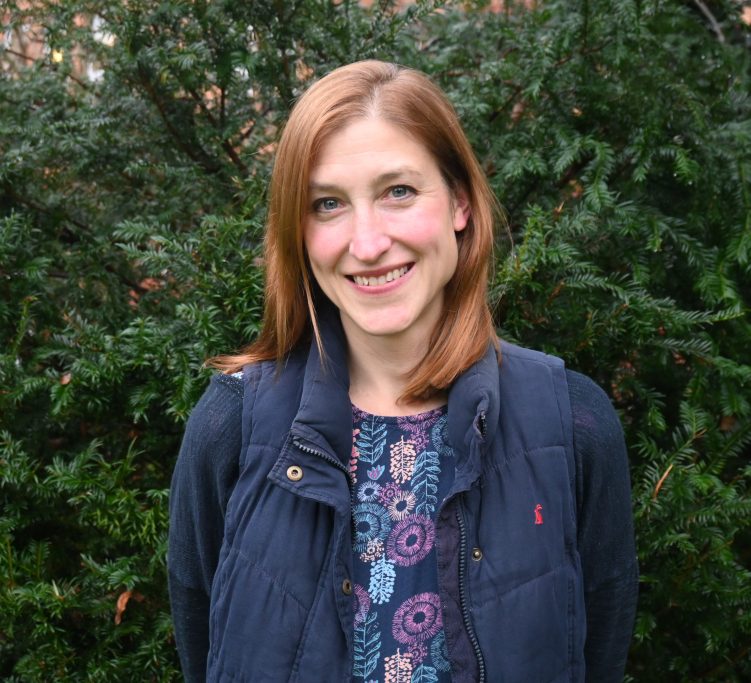
Meet Mrs Bean, Head of English
After spending her teenage years in Athens, Georgia, Mrs Bean took a gap year to earn her performance diploma in guitar. She read English at the University of Oxford, developing a passion for Victorian Literature (and modern bagels). She followed a stint in publishing by studying for her PGCE at St. Lukes. Since then, she has taught for over two decades in schools in Dorset and Devon, previously working at Colyton Grammar School, where she was Head of English.
Whilst teaching any text is a pleasure, Mrs Bean particularly loves teaching Chaucer, with its humour, layered narrative and memorable characters. However, other favourite authors include E.M. Forster, William Blake, Hilary Mantel and Kate Atkinson.
When not teaching, Mrs Bean works on improving her road cycling and painting and enjoys walking and camping, especially with her family.
Where next?